



























(Business in Cameroon) – Viva Logone shows 39% physical progress and 37.9% disbursement after three years.
- Floods, insecurity, and funding declines slow work in Cameroon’s Far North.
- The World Bank–funded project aims to rehabilitate 12,210 hectares of irrigated land.
As of October 31, 2025, the Viva Logone Project, launched on November 28, 2022, has reached 39% physical completion and a 37.9% disbursement rate. The figures were shared during the 9th and 10th steering committee sessions held on November 26, 2025, in Yaoundé to assess progress on this major agricultural program in the Far North region.
According to project coordinator Merhoye Laoumaye, institutional progress has been made and several acquisitions and investments have been initiated, but significant operational challenges persist in project areas. For the 2025 fiscal year, physical execution of the annual work plan and budget was evaluated at 84%, for a total of CFA39 billion.
Hydraulic infrastructure and monitoring systems under deployment
In terms of infrastructure and climate monitoring, 14 hydrometric stations, 12 meteorological stations, and 5 hydrogeological stations have been installed in partnership with the Lake Chad Basin Commission (LCBC) to expand and strengthen the hydrometeorological monitoring network in the Logone Basin.
At the same time, 11 local committees were trained and reactivated to operationalize the flood early warning system. Rehabilitation work on the Maga West perimeters and Pump Stations I and II continues, with leveling and plowing at 98%. Offices for the management centers of the Yagoua and Maga local committees have been completed and equipped. In addition, 317 business plans were selected for co-financing totaling CFA387.7 million to support private initiatives and small agricultural enterprises in the project zone.
Food crisis and implementation constraints
Despite progress made, work has been slowed by major constraints. Exceptional flooding made some project areas inaccessible, causing temporary work stoppages and posing risks of delays in the delivery schedule. This setback comes as the Far North region faces an unprecedented food crisis.
In August 2025, the UN Office for the Coordination of Humanitarian Affairs (OCHA) reported that 29,755 people, including 15,055 women, had received at least one form of food assistance. Beyond security threats, the region is suffering from persistent food insecurity, made worse by rising fires driven by a delayed rainy season. Compounding this are continued declines in funding, which weaken partners’ ability to sustain emergency programs and support rural communities over the long term.
Corrective measures and stakes for the rice sector
To accelerate Viva Logone’s implementation, which aims to increase agricultural production in the Far North, the project coordinator says mechanisms have been introduced to address delays. The steering committee issued several recommendations to optimize impact on the ground, stressing the need to strengthen coordination among actors to avoid duplication of interventions in certain areas at the expense of priority zones.
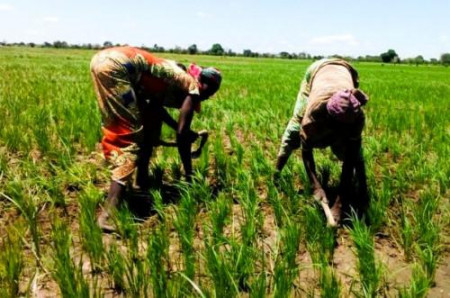
Funded by the World Bank at CFA117 billion over seven years, Viva Logone aims to rehabilitate 12,210 hectares of irrigated land in Yagoua, Maga, Nguémé, and Kaï-Kaï. The project also seeks to strengthen the operational capacity of the Yagoua Rice Development and Modernization Corporation (Semry) to support food security and agricultural modernization in Cameroon, improve local resilience, and ensure sustainable management of ecosystems in the Logone Basin.
Frédéric Nonos

