































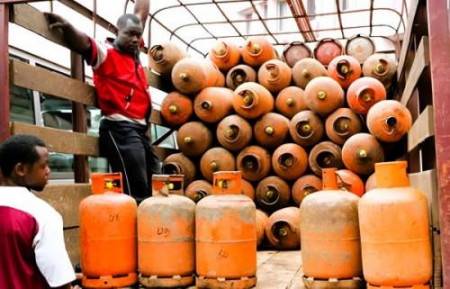
(Business in Cameroon) – The Cameroonian government plans to tighten rules on imports of empty domestic gas cylinders as part of the 2026 finance bill submitted to parliament. The measure is intended to encourage distributors to buy from local manufacturers.
The bill, sent to the National Assembly on November 26, 2025, states that imported empty gas cylinders would be subject to a 12.5 percent ad valorem excise duty. If adopted in its current form, the tax would raise import costs and likely discourage companies from sourcing cylinders abroad. Local producers could then tap into an annual market worth about 8 billion CFA francs, according to official sources. This figure reflects the value of empty gas cylinder imports before Cameroon established its first domestic factories.
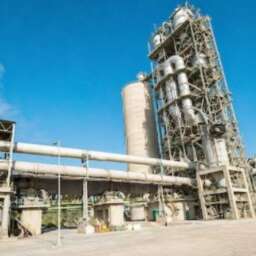
Until 2021, all cylinders used in the country were imported. That changed in 2022, when Prometal Group, a major steel processor in Central Africa, launched the first “made in Cameroon” gas cylinders from its plant in the Douala-Bassa industrial zone. The plant represents a 12 billion CFA franc investment and has an annual capacity of 600,000 cylinders. With national demand estimated at between 450,000 and 500,000 cylinders a year, the facility could export at least 100,000 units once the domestic market is covered.
A second Chinese factory has reportedly begun operating in the Bonabéri industrial zone in Douala, according to official sources. In early 2022, the Investment Promotion Agency also signed an agreement with Africa Cylinder Company Sarl to build a 4 billion CFA franc plant for domestic and industrial cylinders in Douala, although no update on the project has been made public since then.
In 2021, Akeno SA announced the launch of translucent gas cylinders manufactured at a plant under construction on the outskirts of Yaoundé. The company had planned an annual output of 350,000 cylinders. Four years later, these volumes have yet to appear at gas distribution outlets across the country.
Despite mixed progress among local manufacturers, the government’s move to restrict cylinder imports aligns with Cameroon’s ongoing import substitution strategy. The policy seeks to reduce dependence on foreign goods by scaling up local industrial capacity through targeted regulatory and tax incentives.
Expected benefits include job creation, stronger industrial activity, a smaller trade deficit, higher tax revenue and the development of export opportunities.
Brice R. Mbodiam

