






























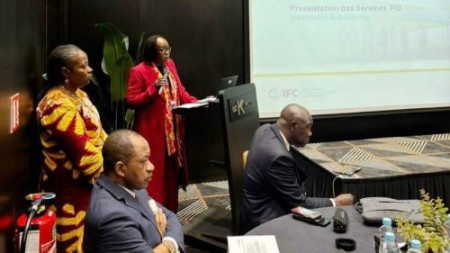
(Business in Cameroon) – The International Finance Corporation (IFC) is strengthening its presence in Cameroon by targeting the main obstacle to SME financing: credit risk. In partnership with the Association of Credit Institutions of Cameroon (Apeccam), it brought together about thirty banking-sector representatives on November 18, 2025, in Douala to present new tools for risk management, financial inclusion, and digital transformation aimed at improving SME access to credit.
The Douala workshop, co-organized by IFC and Apeccam, aimed to introduce IFC’s products and their added value for financial institutions in financing, risk management, financial inclusion, and digital transformation.
Discussions focused on SME credit risk management. SMEs represent more than 98% of Cameroon’s economic fabric but face a high default rate of 20%. According to financial experts, such a level of non-performance leads to higher risk premiums and higher interest rates for SMEs when they apply for loans, which limits access to bank financing.
Risk-mitigation tools for banks
Although local banks already have risk-assessment capacity, IFC intends to complement this system with tools for risk-sharing and risk-reduction. “The goal is mainly to set up SME risk-mitigation instruments so that the sector’s default rate falls to an acceptable level. The international benchmark is around 5%,” said Pierre Kam, executive secretary of Apeccam.
A World Bank Group subsidiary dedicated to the private sector, IFC wants to deepen its involvement in SME financing by offering tailored support to institutions willing to implement more substantial reforms. This includes full diagnostics, technical assistance, and strategic advice. According to Charlotte Ndaw Sako, IFC regional director for the Cameroon cluster, “These tools should help banks improve service quality, anticipate risks, and capture new opportunities in a changing market.”
A growing portfolio supporting SMEs
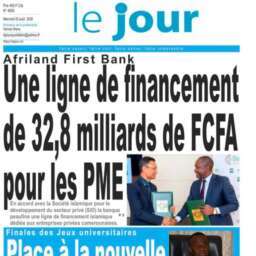
IFC noted that it has already formed several partnerships in Cameroon, including a CFA37.5 billion loan granted last April to Afriland First Bank to improve SME access to credit, particularly for women-led businesses. The partnership also includes internal capacity-building efforts to improve risk-management processes and the quality of banking intermediation.
The Douala workshop is part of a broader effort to support Cameroonian banks as they shift toward more innovative and resilient models suited to an economy dominated by SMEs. IFC currently manages a CFA164 billion portfolio in Cameroon and aims to increase it to more than CFA300 billion within three years.
In Cameroon, IFC’s activities focus on infrastructure (energy, transport, telecommunications), the financial sector (banks, insurance, microfinance), health and education, agriculture, manufacturing, climate, and sustainable development. This sectoral diversification aims to create a more supportive environment for the private sector, especially SMEs, while improving the sustainability of banking models exposed to high credit risk.

