



























(Business in Cameroon) – From 2016 to 2024, China gained 28.7 percentage points in Cameroon’s machinery and equipment import market, according to the 2024 competitiveness report published by the Competitiveness Committee. The think tank, attached to the Ministry of Economy, notes that China’s share rose from 23.8 % in 2016 to 52.5 % in 2024, making it the country’s leading supplier of industrial machinery and equipment.
This growth came at the expense of the European Union (EU). The EU’s market share dropped from 50.1 % in 2016 to 29.3 % in 2023, before edging up to 32.3 % in 2024. Over eight years, the decline reached nearly 20 percentage points.
Cameroon has applied Economic Partnership Agreements (EPAs) with the EU since 2016. These agreements provide for the gradual removal of tariffs on 80 % of European imports over fifteen years, in exchange for preferential access for Cameroonian exports to the EU market. Industrial machinery and equipment are among the key products covered.
Rising industrial capacity
Tariff dismantling on these products began on August 4, 2017, with a 15 % annual reduction in the applicable tariff. Since August 4, 2023, industrial machinery and equipment imported from the EU have been exempt from customs duties. In theory, this relief should have strengthened the position of European suppliers in Cameroon.
However, the Competitiveness Committee notes “an erosion of the EU’s share in Cameroon’s machinery and equipment imports, and a rise in China’s share,” despite the EPAs entering into force in 2016. Local manufacturers cite a price competitiveness gap favoring Chinese equipment. Businesses also point to easier and cheaper access to spare parts, which makes maintaining Chinese products less burdensome than maintaining European ones.
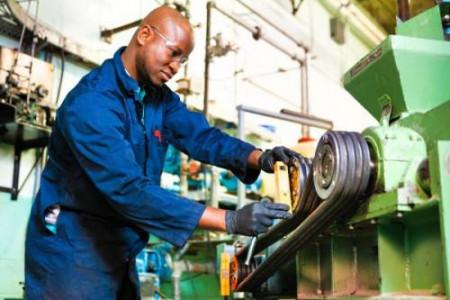
Beyond shifting supply sources, the combination of EPAs and competitive Chinese prices has supported productive investment: machinery and equipment purchases continue to rise. “The overall growth of machinery and equipment imports shows a sustained effort to modernize Cameroon’s production base,” the report states.
Maintenance challenges
According to the committee, imports more than doubled between 2010 and 2024, rising from CFA243.7 billion in 2010 to CFA512.8 billion in 2024. For that year, the National Institute of Statistics (INS) provides a higher estimate of CFA573.6 billion, the largest volume of industrial equipment purchases in six years. Between the pre-EPA period (2010–2015) and the post-EPA period (2017–2024), these imports increased by an average of 22 %, the committee adds.
However, this growth masks a more concerning trend: the deterioration of production assets. According to the INS report on the “economic and financial situation of companies in 2023,” despite higher investment, “the deterioration of production assets continues, rising from 59.6 % in 2022 to 60.1 % in 2023.” In practical terms, six out of ten pieces of equipment in companies are in poor working condition. Maintenance challenges are a frequent cause, resulting in productivity losses and their consequences: lower revenue, market shortages, temporary layoffs, and more.

