
















(Business in Cameroon) – Cameroon has launched its energy compact under Mission 300, which describes a plan to connect eight million additional citizens to electricity by 2030 as part of efforts to achieve universal access. Announced on the sidelines of the 80th United Nations General Assembly in New York, the initiative underscores the government’s commitment to accelerate reforms, attract private investment, and expand clean energy use. Led by the African Development Bank (AfDB) and the World Bank Group (WBG), Mission 300 seeks to electrify 300 million Africans and transform energy infrastructure across the continent.
Through the recently unveiled Compact, Cameroon plans to raise its installed electricity generation capacity to 3,000 megawatts (MW) and ensure 40% of households have access to clean cooking solutions by 2030. According to Cameroon’s Ministry of Energy and Water Resources, only around 67% of Cameroonians currently have access to electricity, leaving more than seven million people without power. The project, backed by the AfDB, the World Bank, and Bloomberg Philanthropies, is expected to attract significant private capital and strengthen regional energy integration.
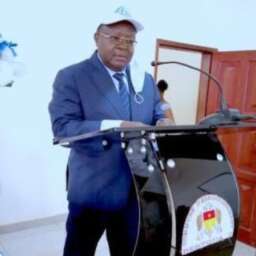
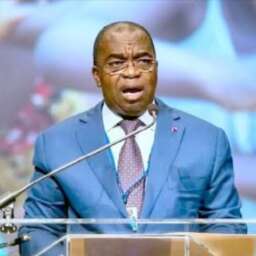
“The Compact aims to bring electricity to eight million Cameroonians who do not yet have access,” said Minister Gaston Eloundou Essomba, explaining the programme’s twin objectives of social inclusion and financial sustainability. “This will require strong government commitment to implement key reforms and operational plans. We are also working to build investor confidence so that private partners who invest in Cameroon’s energy sector can do so in a secure and predictable environment,” he added.
The Mission 300 Compact places Cameroon at the centre of a continent-wide effort to connect 300 million Africans to electricity by 2030, according to the World Bank Group and the African Development Bank (AfDB). Under this framework, the World Bank will electrify 250 million people, while the AfDB targets another 50 million within the same period. The scale of this challenge remains vast, as nearly 600 million people in Sub-Saharan Africa still live without electricity, representing about 83 percent of the global off-grid population.
Financing for Mission 300 is estimated at more than US $50 billion in confirmed commitments, with total mobilisation projected to reach around US $90 billion from multilateral banks, development partners, private investors and philanthropy. Implementation strategies indicate that roughly half of all new connections will be achieved through national grid expansion, while the other half will rely on distributed renewable energy (DRE) systems, such as solar mini-grids and standalone solar solutions. Cameroon’s Compact, is valued at approximately US $12 billion. It forms part of the larger continental blueprint to bridge Africa’s power gap through a combination of reform, investment and private-sector participation.
Mercy Fosoh

