












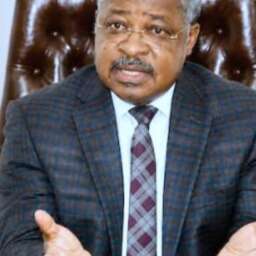





Dr Nsah Mala
Non-Resident Fellow, Governance and Democracy Division
Nkafu Policy Institute
and
Dr Blake Ewing
Assistant Professor of Political Science, School of Politics and International Relations
University of Nottingham (UK).
Context – Indigenous Baka People and Multiples Injustices
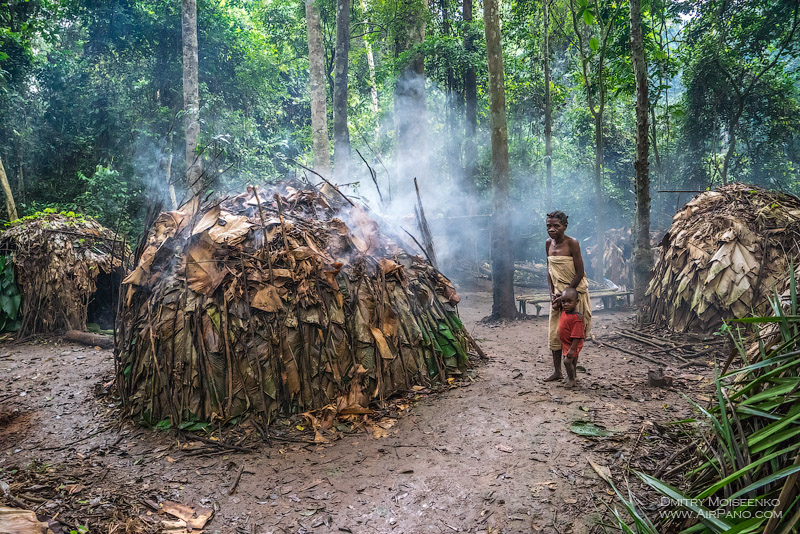
For thousands of years the indigenous Baka people – also known as Baka Pygmies or Pygmies – have inhabited the tropical forests of the Congo Basin, especially stretching across present-day Gabon, Congo-Brazzaville, and Cameroon. Like indigenous forest people elsewhere, the Baka lived by sustainable practices of caring and sharing, hunting and gathering, and nature-based medicine (1, 2).
However, this lifestyle is changing rapidly. In places like southeastern Cameroon, the creation of natural parks and reserves around a model of the ‘fortress conservation of nature’ has forcibly displaced many Baka communities from their ancestral forests (3). They now live a precarious existence in villages along the many roads in the area; some of these roads have now been paved to accommodate the logging trucks that thunder past, day and night. And the Baka people have been turned into “the forest people without a forest” (4).
Nonetheless, it is the Baka who are often presented as the destroyers of their ancestral forests, namely, in some instances, for offering their hunting skills to support a poaching and bushmeat trade that operates at a near industrial scale. This is despite abundant evidence that most poaching is done and facilitated by outsiders, and that the main drivers of deforestation in the Congo Basin are State-backed commercial logging operations, large-scale plantation agriculture, and mining (5).
Despite efforts of some international and local NGOs, the Baka are often victims of “violence, corruption, and false promises” (6). Living on the roadside, they are encouraged and incentivised to become farmers, threatening their longstanding culture and traditional ecological knowledge. Any infrastructural development is modest, and with the forests depleted of wildlife and altered by climate change, there is little food security. Access to education and healthcare remain poor, leading to high prevalence of disease and mortality (7).
Boosting participatory governance and research among the Baka People
In attempts to address some of these issues, Cameroon’s government has decentralised the management of forest resources. This entails, as one document puts it, “opportunities offered by the legal process to promote participatory management of forest resources including the allocation of community forests, council forests and forest taxes, […] to mitigate environmental injustice to local communities caused by centralized public forestry and social policies” (8).
These ideas should not be dismissed. International initiatives and organisations for tropical forest management strongly recommend collaborative and participatory approaches that involve indigenous and local communities, State actors and other stakeholders. For instance, the European Union’s Forest Law Enforcement, Governance and Trade – Voluntary Partnership Agreement (FLEGT-VPA) programme recommends that “the African continent and the Congo basin forest regions especially where most indigenous communities reside needs institutions that enhance the full participation of the forest communities into the management of the forest resources” (9, 10). The EU FLEGT-VPA programme has the objective to promote sustainable forest management and reduce illegal logging by supporting the implementation of VPAs between the EU and partner countries (11).
In Cameroon, however, these participatory approaches are still largely superficial and subject to myriad shortcomings. Data from south Cameroon suggests that in some instances the decentralisation of forest resources to marginalized local people has reduced rather than improved metrics of socio‐environmental justice (8). This is unsurprising. Most projects are flawed with imbalanced power relations wherein the State retains too much power at the detriment of civil society organisations (CSOs) and the indigenous Baka (9). Moreover, State-led participatory approaches in Cameroon are usually limited to the management of forest resources and often do not include issues of education and health.
Nevertheless, research increasingly demonstrates the usefulness of genuine collaboration and participatory approaches involving the Baka. Some examples include: collaboration between indigenous people and park rangers in the context of conservation in the Congo Basin and the role of citizen science and participatory technology (12); the implementation of biocultural conservation through Extreme Citizen Science in the rainforests of Cameroon (13); and a participative and immersive methodology of research-as-play used to engage indigenous Baka children in research on their educational marginalization (14).
Which Futures Do Indigenous Baka People Want?
Still, work remains to include the Baka in envisioning and planning a better future. Research shows that the Baka are desperately concerned about how forest management negatively impacts their livelihoods and limits their self-determination (15, 16). In January 2025, as part of a British Academy-funded research project called “Wetland Times,” and in connection with a project on #CongoBasinFutures, we co-organised participatory foresight workshops with Baka people in the villages of Assok and Doum located along roads near the town of Mintom II (17, 18, 19). These were listening exercises to activate indigenous futures-making (20, 21). Using the Futures Triangle tool developed by Sohail Inayatullah (22, 23), the Baka people – men, women and young people – explored how they see different undesirable and preferred futures for their communities.
Diverging Future Visions – Undesirable and Preferred Futures
From these exercises, it is abundantly clear that the Baka do not want to wake up to futures where all their ancestral forests have been altered beyond recognition. They are worried about logging, but also seeing the forests designated as touristic sites. They worry about drought and climate change more broadly – even in one instance wondering if changing weather is punishment from God for leaving the forest. They worry about a future bereft of their cultural heritage, but also share concerns over their children’s education due to hunger, anti-social behaviour, and reduced numbers of girls going to school due to pregnancies and early marriages.
Meanwhile, the Baka identified desirable futures in many domains.
In terms of administration and governance, the Baka want to have more of their chiefs recognised by the State to secure their lands and represent their interests (there is only one instance of this so far, in Assok). They also want Baka representation in State government decision-making processes.
Most Baka accept an agricultural future. But they want to have space to create bigger farms, especially for lucrative cocoa cultivation.
In terms of cultural heritage, the Baka want to bring more modernity to their ancestral architectures. They also want to construct traditional hospitals and establish cultural museums like the new Baka Living Museum in Assok village. They equally want to preserve their cultures and traditions through forest conservation.
In terms of education, the Baka want their children to be well-educated, with higher rates of education and employment in their communities. Accordingly, they want the construction of nursery schools, more primary schools, bilingual schools, and technical schools located in their villages. They want the establishment of birth certificates and national identity cards to ease the insertion of Baka children into schools and Baka people into national life.
For those attending schools outside their villages, they want specific Baka residences for their children and the establishment of special boarding schools exclusively for the Baka. These boarding schools, they suggest, should operate both the national curriculum and incorporate Baka indigenous education, with the possibility of bringing Baka teachers to the school and taking Baka children to learn in the forests during holidays. They also want Baka adults to be literate enough to read, count, and manage money properly. Consequently, they want the creation of special educational programmes for Baka adults and parents.
In terms of health, the Baka want to have health facilities such as health centres and hospitals in their communities or within reasonable reach. They want their ancestral forests to be protected while they are granted access to these forests to harvest food and medicinal plants. In terms of infrastructural development, some Baka people want to see a transformation of their roadside villages into towns. Accordingly, they want the construction of (more) asphalted roads, modern houses and villas, boreholes and public markets.
Present Motivations and Obstacles
There are many drivers and signals of change presently motivating the Baka to seek preferred futures. These include their proximity to the town of Mintom II and the current increase in cocoa prices. They are motivated by some Baka children in school and some who are already working. They also draw inspiration from the transformation of other villages by their educated children (e.g. President Paul Biya’s transformed Mvomeka village) and villages with recognised chiefs securing their land rights.
The Baka have to overcome numerous obstacles. Their children trek long distances to schools (about 10km) due to the absence of nursery and primary schools. Hunger and the absence of birth certificates prevent some children from schooling. While some Baka children are very stubborn, some lack motivation for school, and others do not like school and are more interested in forest activities. Some Baka parents do not yet understand the value of education. Consequently, some parents encourage children to follow them to the forests instead of going to school. Lack of sexual education leads to the prevalence of early pregnancies and marriages among girls. Parents also lack money for food, healthcare and educational needs. They lack means to carry out large-scale agriculture. And they lack potable water and health centres in their villages, thus covering long distances to health facilities. Other obstacles include poor management of money among most Baka, absence of Baka children among national decision makers, and high levels of alcoholism.
Past Motivations and Obstacles
Some historical practices motivate the Baka towards preferred futures. For instance, alcohol was never part of the Baka ancestral culture. Baka ancestors were very dynamic and hardworking, thus bequeathing a great heritage to their future generations. Baka parents were very strict to ensure that children started giving birth from 20–25 years. Some Bantou families helped Baka children by housing and sending them to school – some Baka parents want more of such gestures.
The Baka must also overcome some historical obstacles. Some of their recent parents are/were very alcoholic. Their ancestors were never interested in modern lifestyles and schools: they were only interested in forest lifestyles. And this contributes to some anti-school attitudes among the Baka today.
Conclusion and Recommendations
As our participatory foresight research demonstrates, indigenous Baka people are able, willing and ready to co-design and achieve their preferred futures, blending their ancestral forest lifestyles with modern lifestyles. The Baka want and deserve collaborative and participatory research and governance initiatives that respect their human dignity and rights. Accordingly, we recommend more collaborative and participative research that is co-designed and co-led with the Baka and focused on their concrete needs. We also recommend that the Cameroonian government and other governments in the Congo Basin should make room for genuine deliberative and participatory governance involving the Baka in ways that promote their self-determination with actual commitment from the State in terms of implementing co-designed projects and futures. Attention should also be paid to the specific contexts of each Baka community. Finally, we recommend that the Cameroonian government and its development partners should provide financial means and help the Baka communities around Mintom II (and beyond) to achieve their collaboratively designed preferred futures.

