

















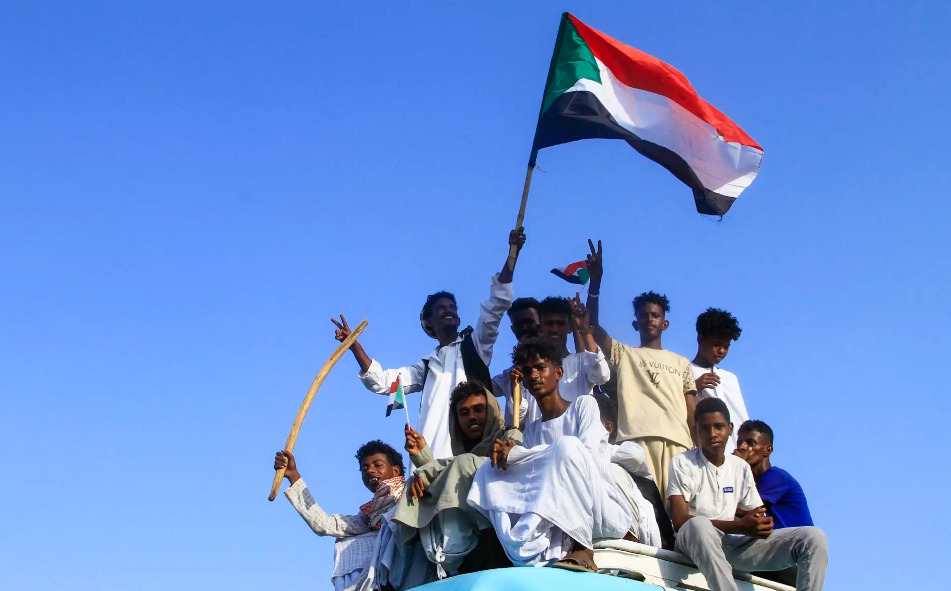
Sudan, a country long mired in political turmoil and intra-state violence, has plunged once again into a disastrous war of great regional and international consequences for peace. Since April 15, 2023, a violent struggle for supremacy has been unfolding between the Sudanese Armed Forces (SAF), led by General Abdel Fattah al-Burhan, and the paramilitary Rapid Support Forces (RSF), under the command of General Mohamed Hamdan Dagalo (Hemedti), engulfing the country in anarchy. This war, which erupted amid a hesitant political transition in the wake of the 2019 coup against veteran leader Omar al-Bashir, has rapidly escalated into a full-blown humanitarian crisis.
According to the United Nations, over 14 million people have been forcibly displaced, one of the world’s largest displacement crises, and nearly 26 million people needed humanitarian assistance as of mid-2025. Famine-like conditions have already been reported in parts of Darfur, with food, water, and basic healthcare becoming increasingly restricted. Concurrently, the overall destruction of infrastructure like hospitals, power generation, and schools, accompanied by civilian attacks and blatant abuse of human rights – especially sexual violence against women and girls, has created a feeling of despair and chaos. Despite multiple ceasefire negotiations, such as the Treaty of Jeddah, attempts to stop the fighting and protect civilians have repeatedly failed, undermining local mediation as well as UN-supported peace efforts.
This policy brief aims to examine the multifaceted dimensions of the Sudanese conflict—its causes, actors, humanitarian toll, geopolitical implications, and institutional collapse—while providing timely and tangible recommendations for stakeholders committed to restoring peace and safeguarding Sudan’s future.
- Dynamics of the Sudanese Conflict
Root causes of the conflict
The current crisis in Sudan is structurally rooted in previous patterns of domination and inequality. Power and economic opportunities under colonial domination by Britain and Egypt, and even after independence in 1956, became concentrated in Khartoum at the expense of the periphery regions of Darfur, Kordofan, and the Two Areas (South Kordofan and Blue Nile). Such structural buffers ignited rage, in the form of armed rebellions, like the Darfur conflict of the early 2000s, combined with decades of ecological degradation and climate patterns.
The 2019 ousting of Omar al-Bashir heightened fear among the military and elites of losing advantage and influence, setting the stage for the 2021 coup that overthrew a fragile civilian-military regime. The April 2023 conflict between the Sudan Armed Forces (SAF) led by General Abdel Fattah al-Burhan and the Rapid Support Forces (RSF) led by General Mohamed Hamdan Dagalo (“Hemedti”) indicates a struggle for power in terms of political authority, the integration of militaries into institutions, and control over lucrative networks such as gold and land. Ethno-religious tensions, as previously witnessed in the guise of earlier atrocities committed in Darfur, continue to hover over the conflict. RSF, which succeeds Janjaweed, is seen to commit sexual abuse, ethnic massacres, and attack non-Arabs.
The different actors and their interests
The conflict centers on two warring parties: the SAF and the . Al-Burhan leads Sudan’s regular forces, with units that nostalgically look to Bashir-type Islamism, backed by Egypt and Iran. Dagalo leads the RSF—a locally based, highly mobile paramilitary class with a Darfur origin and commercial interests in private gold mining. The support it receives from the UAE and access to gold revenues provide the operational beat. The RSF has just signed a new coalition agreement with the Sudan People’s Liberation Movement-North (SPLM-N) that controls and possesses mostly Sudan’s Nuba Mountains.
Civil society and local movements—namely the “Popular Resistance” and Emergency Response Rooms (ERRs)—play the main roles. They are networks born out of the 2019 revolution, mobilizing civilians for humanitarian tasks and defensive positions against RSF’s advance. Their persistent activity demonstrates both the persistence of Sudanese citizens and the breakdown of centralized power.
The external actors get involved, turning Sudan into a proxy arena for regional rivalry. RSF finances and arms have been traced to the UAE, Saudi Arabia, and Russia. These connections are symptoms of greater ambitions: access to Sudan’s Red Sea coastline, farmland, and gold reserves. Iran has been reportedly supporting some of the war’s most influential players, whom are recently been subjected to sanctions from the US government. Gebreil Ibrahim Mohamed Fediel (Gebreil) and the Al-Baraa Bin Malik Brigade (BBMB), supported by Iran, especially its Islamic Revolutionary Guard Corps (IRGC), according to the USA, have greatly contributed to the war that has brought untold and gross misery to Sudan and largely against the civilian population, and thwarting every effort to end the war. Iran’s entry into the Sudan war is a move to extend its Islamist control of the nation. Gebreil, the Finance Minister of Sudan and the chairman of the armed resistance group – Justice and Equality Movement (JEM), has inducted the majority of its fighters into the Rapid Support Forces, responsible for most human rights violations and destruction of state infrastructure in Sudan, as they fight against the SAF. BBMB is an Islamist movement that is allied to Sudan’s former president Omar Al Bashir, and which has also inducted over 20,000 combatants into the RSF to strengthen its opposition against the SAF. Sudan’s Islamist JEM has boycotted US sanctions against its chairman and labeled them as legally baseless and unjust.
- Ramifications of the Conflict
Humanitarian toll
What is happening in Sudan is likely the world’s worst crisis since 2023 and one of the world’s largest food crises. Over 13 million people are displaced—nearly 9 million internally and 3.5 million refugees—making it the world’s largest internal displacement crisis. More than 150,000 are believed to have been killed by June 2024, and huge expanses in Darfur now face famine conditions, with more than 5.5 million IDPs. The war has an enormous effect on the education system and is responsible for over 16.5 million children in Sudan who are out of school.
Hospitals and public infrastructure are collapsing. There have been reports by health professionals of widespread pillage and attacks at health centers, and infectious and waterborne diseases erupting in the camps. Women and children are most vulnerable—subject to rape, forced conscription, trafficking, deprivation of education—with reports of connected war crimes echoing genocide-level brutality. 53% of the displaced population is made up of females, and they are exposed to gender based violence and sexual assault compared to the men.
Geopolitical Ramifications
Sudan is fast becoming a regional hotspot. Cross-border attacks into DR Congo and the Central African Republic risk broader instability, UN peacekeeping agencies say. Neighboring states like Chad and South Sudan accommodate escaping refugees, straining their resources and inflaming inter-communal tensions.
Regional actors—Egypt, Saudi Arabia, UAE—fight over results, lest Sudan under the RSF or SAF change its allegiance, increase competition on Nile waters, or allow foreign military bases on Red Sea outlets. There have been many alerts warning that Sudan will become another protracted Middle Eastern proxy conflict played out in Africa by most outside powers, who all desire to protect their (largely economic) interests in Sudan. Banks are frozen, there are no public budgets, inflation is out of control, and the economy has contracted by about 40%.
Sudan currently has a broken justice system that cannot prosecute crimes against humanity and other atrocities of the conflict. Violence and fear have replaced the rule of law, and civilian administrative capabilities do not exist—state institutions function feebly, with rudimentary services not being provided.
III. Navigating the Path to Sudan’s Recovery: What needs to be done to enhance peace in Sudan
- Ceasefire & inclusive political dialogue
The solution to the Sudan conflict cannot be a military approach. The former Prime Minister, and some UN representatives emphasize a call for a negotiated ceasefire and an inclusive, civilian-led process. This must include youth, women, ethnic, and marginalized groups, as well as SAF and RSF delegates, along with civil society. In this inclusive dialogue, opposing groups are willing to set aside their economic and political agendas, but care about the entire Sudanese state.
- International coordination & arms embargo enforcement
Overlapping, divided peace efforts need to be consolidated. A UN/AU coordinated international high-level contact group shall harmonize diplomacy, sanctions, and reconstruction commitments—paradoxically, some elements of the proposed London Action Plan. Direct-targeted sanctions against all major actors funding and fueling the war are required. For this purpose, other countries are called on to emulate the US actions of sanctioning some Sudanese Armed Group leaders. The foreign sponsors must cease supplying arms and abide by existing UN embargos; the external actors must be held accountable by legal as well as economic sanctions for violating these laws. The restriction on arms supply will go a long way to restoring peace and reducing casualties because, without arms, the war cannot be sustained – especially because Sudan does not produce arms.
- Address root power structures and prosecution of perpetrators of war crimes
Peace cannot hold without structural imbalances being resolved: The Sudanese government must decentralize power, reorganize the security sector’s command chains, demilitarize and integrate the RSF, and enact land and resource reforms. While resolving the underlying power dynamics, it becomes unavoidable to provide justice to all the victims of the conflict.
- Transitional justice & institutional reconstruction
Ensuring accountability is vital: truth commissions, reparations, hybrid courts, and prosecutions for war crimes and atrocities—especially crimes against women and ethnic minorities—must be established. This has worked in the former case of Rwanda, where the International Criminal Tribunal of Rwanda (ICTR) was created to prosecute senior leaders responsible for the genocide. Similarly, the Truth and Reconciliation Commission created in South Africa after the apartheid held special hearing sessions for women’s experiences of the apartheid, as a special group of people who are most vulnerable during conflicts. At the international level, member states of the International Criminal Court (ICC) should, through the referral policy, take such cases of perpetrators of war crimes and crimes against humanity in Sudan (a non-ICC member state) to the court for prosecution that will serve justice to victims and survivors – indeed, there is no peace without justice.
- Humanitarian access & grassroots support
Both conflicting parties must allow the safe delivery of food, medicine, and aid into besieged regions. Community-led initiatives like the Emergency Response Rooms, which have reached millions of civilians, must be supported and scaled up.
- Regional integration & refugee reintegration
Sudan should coordinate with its neighbouring countries, with technical support from the AU and IOM, in order to ensure the safe return of refugees and cross-border security. Negotiating Nile water-sharing, demilitarizing border zones, and regional cooperation on development could knit Sudan back into its wider African and Red Sea environment.
Conclusion
Sudan stands at a crossroads: one path leads to yet more fragmentation—ethnic strife, collapsing institutions, additional famine and refugee streams; the other, however unlikely it may now appear, is a carefully calibrated investment in ceasefires, inclusive politics, justice, and reconstruction anchored by engaged regional and global players. The path ahead is steep and long. But real peace in Sudan must be constructed based on recognizing its marginalized regions; rebuilding collapsed state capacities; investing bottom-up resistance with governmental legitimacy; neutralising foreign combat financing; and holding atrocity perpetrators accountable—not for moral reasons alone, but to make the future resilient enough to withstand the temptation of military backsliding.

Enowbachem Agbortanyi
Enowbachem Agbortanyi is a Policy Analyst with the Peace and Security Division at the Nkafu Policy Institute. He holds a Master’s in Political Science from the University of Gothenburg and is a Swedish Institute Alumnus. His work spans roles at Centre for Human Rights and Democracy in Africa (CHRDA), and research contributions to the Varieties of Democracy Institute (V-Dem) and the Governance and Local Development Institute (GLD) both in Sweden.

