




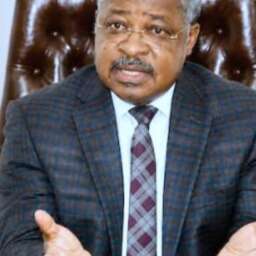














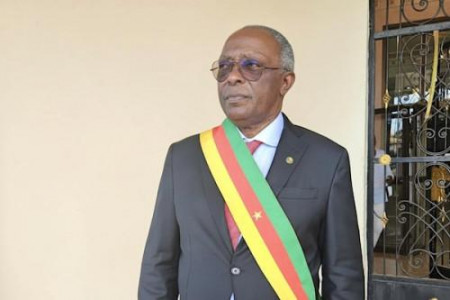
(Business in Cameroon) – A doctor by training, former mayor of Bafoussam I, and now president of the West Regional Council, Jules Hilaire Focka Focka has been leading since 2020 a regional development plan valued at CFA6,000 billion. His career reflects a shift from local governance to wider responsibility over an entire strategic region. In this interview with Business in Cameroon, he discusses the implementation of decentralization, the transformation of Bafoussam, the impact of new infrastructure on the local economy, and initiatives to engage the diaspora and international partners in the development of Cameroon’s West.
Business in Cameroon: Since you became president in 2020, how do you assess the implementation of decentralization in the West region? What progress has been made and what challenges remain?
Dr. Jules Hilaire Focka Focka: Thank you for giving me the chance to speak about my region. On decentralization, specifically its second phase which covers the regions, I would say progress is gradual. We were installed in 2020, and the Head of State made it clear from the start that the process would be step by step. We trust this approach.
That said, expectations are very high. People want to see immediate improvements in their daily lives, and that creates difficulties. Even when we explain that decentralization will advance progressively, citizens want quick results. But this takes time. All regions are now in place, even if not yet in their permanent headquarters. Recruitment of staff is still waiting for the local civil service law and the local taxation law.
Still, there are positive steps. Budgets have grown: in 2020–2021, they were around CFA3 billion; today, in some regions, they stand at CFA6–7 billion. It remains modest, but it shows steady progress. We only wish the pace would be a little faster.
Business in Cameroon: Bafoussam, the regional capital and Cameroon’s third-largest city, is visibly changing with new projects and infrastructure. Yet some say connections, especially air links, are not always reliable. How do you see the impact of these projects on the local economy?
Dr. Focka Focka: Thank you for noting this progress. Bafoussam is indeed Cameroon’s third city and the heart of the West. We owe much to the Head of State, who decided to radically modernize its urban landscape. Thanks to the C2D program and projects linked to the Africa Cup of Nations, many works were completed. The region has seen a real transformation in a short time.
I want to pay tribute to the Minister of Urban Development, the city mayor, and the three district mayors. Their dynamism has driven this change. It is the combined effort of all these actors that explains the major progress Bafoussam and the entire region are experiencing today.
Business in Cameroon: Your regional development plan is valued at nearly CFA6,000 billion. Many see this as very ambitious. How do you plan to mobilize such financing when decentralization funding is still limited?
Dr. Focka Focka: To transform our region, we must be ambitious. Our regional development plan is worth over CFA6,000 billion, and it is realistic. If you look at the National Development Strategy 2030 (SND30) and divide it by region, the figures average about CFA5,000 billion per region. So we remain within the national framework.
This plan, adopted in 2022, serves as our roadmap, just as the SND30 does at the national level or communal plans do for municipalities. We consulted everyone—local elected officials, traditional chiefs, civil society, the diaspora. I personally traveled to Europe and North America to involve the diaspora. Together, we produced an ambitious but realistic plan designed to make the West a leading destination.
Business in Cameroon: You have signed partnerships with the High Council of Cameroonians Abroad and international firms such as Reliance Business. What do you expect from the diaspora, which already contributes through remittances and donations?
Dr. Focka Focka: The diaspora is at the heart of our priorities. From the start, we worked to mobilize it because of its dynamism. On my trips abroad, I saw that many had a distorted view of Cameroon, fed by false information. We needed to show them the benefits of decentralization and prove that the West now offers them a direct entry point, without passing through Yaoundé.
We signed agreements with the High Council of Cameroonians Abroad and other diaspora bodies. We also engaged with major stakeholders during conventions in Los Angeles. The goal is to make them active partners, not just donors. Our limited resources slow structured partnerships, but we are making progress. The diaspora already takes part in our major events, such as regional exhibitions and fairs. In the future, with improvements in local taxation and the civil service, we will strengthen this cooperation further.
Business in Cameroon: You have stressed the importance of supporting SMEs and entrepreneurship, especially in Bafoussam. What steps have you taken?
Dr. Focka Focka: Our limited finances have slowed us, but we have started some key initiatives. Vocational training is central to our approach. We are negotiating with AFPA (France) and other European partners through decentralized cooperation, notably with United Regions Organization. The aim is to set up training centers for trades.
These centers will prepare young entrepreneurs, train them and build their capacities. Today, many launch businesses without proper preparation and fail quickly. We want to provide structured support for those with ideas and initiatives.
Business in Cameroon: The West is also a cultural and traditional hub. How is the Regional Council working to promote its cultural and tourism assets?
Dr. Focka Focka: The West has not received major structural projects, so we decided to make culture and tourism our pillars of development. We have strong assets—landscapes, traditional chiefdoms, festivals, and natural sites. That is why we created the Regional Tourism Office, which already has its own headquarters—the only one of its kind in Cameroon.
We have built partnerships with the Auvergne-Rhône-Alpes and Pays de la Loire regions in France, as well as NGOs like “Grands Sites de France” and Tétratis. These partnerships help us restore heritage sites, such as traditional thatched roofs. In the coming days, we will launch pilot demonstration sites. Our vision is clear: culture and tourism must become structuring projects for the region.
Business in Cameroon: Finally, what are your main requests to ensure decentralization helps the region achieve its ambitions?
Dr. Focka Focka: My main request is to accelerate the process, especially by making local taxation effective. The law has already been voted and promulgated; it must now be applied so regions can generate their own revenue. At present, we depend entirely on the general decentralization grant, which is insufficient.
We also need the local civil service, because we require qualified staff to manage regional affairs and negotiate international partnerships. And more ministries must transfer their competencies. To date, only a few have done so, while too many still hold back unjustifiably.
Since 1996, the Constitution has stated that Cameroon is a decentralized unitary state. The Head of State chose a gradual approach, beginning with municipalities and now regions. But it is time for all to play their part. Decentralization is the real path forward for our country, and we must work together to make it succeed.

