








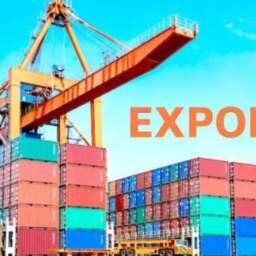





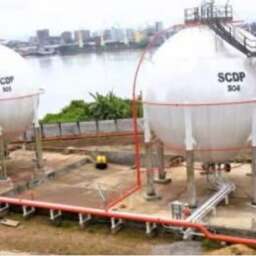







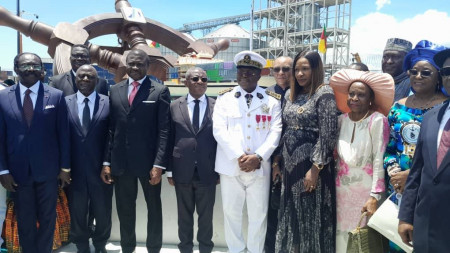
(Business in Cameroon) – Cameroon’s government expects its main port activities to generate $2 billion in additional annual trade for the CEMAC region by 2030, according to figures shared during the inauguration of new infrastructure at the Port Autonome de Douala (PAD). Prime Minister Joseph Dion Ngute, representing President Paul Biya, launched the port’s 150th anniversary celebrations on September 26, 2025, by unveiling upgrades to the equipment.
The new infrastructure includes a 628 billion FCFA power grid and dredged access channels to a depth of -7 meters. These developments aim to raise cargo capacity from 12.4 million tonnes in 2024 to 21 million tonnes in 2030. The expected outcome is to strengthen Douala’s position as a regional trade hub.
Among the improvements already in place are digital tracking systems and expanded quays for larger vessels, which have cut dwell times from 14 to 8 days, with revenue for 2025 targeted at $150 million. A future deep-water port at Manoka is also planned to prevent saturation within the next decade.
PAD’s Director General, Cyrius Ngo’o, emphasized the port’s transformation: “The modernization of Douala-Bonabéri, ordered by President Paul Biya in 2011, has made it a high-performing economic catalyst for Cameroon. The port handles 70% of external trade, 85% of customs revenue, 43% of Douala’s formal jobs, and 18% nationally, with 495 billion FCFA in salaries recorded in 2020.”
Today, the port processes 95% of Cameroon’s trade and up to 80% of traffic for Chad and the Central African Republic. The 2030 expansion aligns with a regional GDP of $120 billion in 2024, with PAD’s growth projected to contribute 1.5–2% to CEMAC’s annual growth under the AfCFTA, which is expected to double intra-African exports by 2035.
By Cynthia Ebot Takang

