





























Informality, inequality, weak digital infrastructure, and limited productive financing continue to marginalize ECCAS economies, while calling for coordinated reforms to achieve inclusive and transformative trade integration.
By Dr. Salim Ahmed Vesah
Trade Integration Without Solid Foundations?
Against a backdrop of increasing fragmentation in global trade, marked by the restructuring of value chains and geo-economic tensions, Central Africa risks further marginalization unless it rapidly strengthens its regional integration. Currently, less than 10% of trade among the countries of the Economic Community of Central African States (ECCAS) occurs between them, compared to 60% in Europe and 40% in East Asia. How can a region with abundant natural resources, a youthful population, and growing entrepreneurial potential remain on the margins of trade dynamics? The 14th Ministerial Conference of the World Trade Organization (WTO), scheduled for March 26 to 30, 2026, in Yaoundé, Cameroon, presents a unique opportunity to address whether ECCAS countries are prepared to take a leading role in global trade. Beneath the opportunities offered by international trade and regional integration discussions lie deep-rooted structural constraints embedded in the economies. The prevalence of the informal sector undermines formal trade mechanisms and limits effective integration. Additionally, growing inequalities restrict market depth and hinder productive transformation. Deficiencies in digital infrastructure prevent the emergence of an integrated economic space capable of supporting modern trade. These interdependent factors trap the region in a structural quagmire characterized by low productivity, market fragmentation, and external dependence. The African Continental Free Trade Area (AfCFTA) offers an unprecedented opportunity, but without internal structural transformation, it risks remaining merely an integration on paper.
- Informality: Invisible but Ineffective Integration
One of the major obstacles to trade in Central Africa is the predominance of the informal sector. It is estimated that 30-40% of intra-African trade occurs informally, a proportion likely to be even higher in Central Africa, where cross-border trade relies heavily on unofficial channels. Furthermore, between 70% and 90% of employment is in the informal sector, reflecting the low level of integration of economic actors into the formal frameworks of regional trade. This indicates that, despite low official statistics, trade does exist; however, it falls outside formal regulatory and fiscal frameworks. This informality highlights both the adaptability of economic actors and a significant failure of institutions. High formalization costs, administrative complexity, legal uncertainty, and a lack of trust in institutions drive businesses, especially small and medium-sized enterprises (SMEs) to operate outside the formal system. Unfortunately, this situation incurs substantial economic costs. Informality hinders access to finance and reduces productivity, ultimately weakening states’ fiscal capacities and limiting their integration into value chains. It also obstructs the effective implementation of trade policies. Consequently, as long as the informal sector remains dominant, regional integration will continue to be partial and poorly structured.
- Inequality: A Barrier to Demand and Productive Transformation
Economic inequalities are a significant obstacle to trade integration, characterized by high income concentration, with Gini coefficients often ranging from 0.40 to 0.55 in several sub-regional countries, primarily due to extractive sectors. These inequalities limit middle-class formation and undermine the domestic market’s effective size. This demand constraint weakens incentives for local production and processing, perpetuating an economic model reliant on raw material exports. Additionally, inequalities lead to disparities in access to education, finance, and infrastructure, limiting human capital accumulation and productive enterprise upgrading. In the context of ECCAS, these dynamics are intertwined with informality and digital infrastructure deficiencies, reinforcing a cycle of low productivity, market fragmentation, and external dependence. Ultimately, the ECCAS economic model presents a paradox: growth from raw material exports generates wealth for an elite while leaving the productive sector trapped in low productivity. To achieve effective trade integration, particularly through the AfCFTA reducing inequalities is not just a moral imperative but essential for creating the demand that will support regional supply.
- Digital Divides: The Missing Link in Integration
Digital infrastructure is crucial for integration, yet it remains inadequate and fragmented in Central Africa. Internet penetration is below 30-40% in several countries, with significant urban-rural disparities. High internet access costs account for up to 4-5% of the average monthly income, compared to less than 1.5% in developed economies. This limits access to digital services and e-commerce for businesses, particularly SMEs. The lack of regional cloud infrastructure and interoperable payment systems hinders digital trade. Much data is hosted outside the continent, increasing costs and limiting the local technology ecosystem’s development. Digitalization offers opportunities but risks exacerbating inequalities without appropriate policies. These digital divides are intertwined with informality and inequality. Unequal access to technology excludes many from digital commerce, while informality limits the adoption of formal digital tools, reinforcing a cycle of economic fragmentation, low productivity, and marginalization in regional and global value chains.
- A Shortage of Funding and Productive Infrastructure
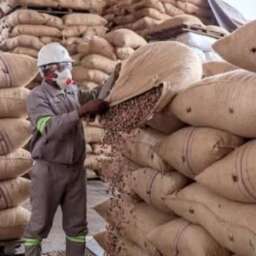
In addition to the constraints mentioned above, it is crucial to highlight that the region’s trade integration is hindered by a lack of appropriate funding. Specifically, SMEs, which are the backbone of the economy, have limited access to credit. Financial systems are underdeveloped, and long-term financing instruments are inadequate. This funding shortfall limits the capacity to invest in productive infrastructure, especially in the industrial and manufacturing sectors. For instance, while Africa produces a significant proportion of cotton raw material, it processes less than 2% of it, exporting up to 90% in its raw state on average. This scenario underscores a broader issue: the inability to develop integrated regional value chains. Without substantial investment in infrastructure and industry, the region is likely to remain confined to the role of a raw materials supplier.
Towards a New Approach to Regional Integration
In light of these challenges, regional integration in Central Africa must transition from a declaratory approach to an operational one, grounded in concrete and coordinated reforms.
- Firstly, governments must accelerate the implementation of existing agreements by harmonizing trade regulations, simplifying customs procedures, and reducing non-tariff barriers, all coordinated by ECCAS regional institutions.
- Secondly, an inclusive integration strategy must be established, explicitly targeting the gradual formalization of SMEs through tax incentives, easier access to credit, and technical support mechanisms, led by the Ministries of Finance and SME development agencies.
- Thirdly, governments must jointly invest in regional digital infrastructure, particularly interoperable payment platforms and data centers, while harmonizing digital regulatory frameworks under the guidance of regulatory authorities and central banks.
- Finally, the mobilization of finance should be structured around partnerships with development banks and the private sector to prioritize funding for regional infrastructure (transport, energy, digital) and to support industrial transformation.
A Conditional Leadership
Ultimately, the 14th WTO Ministerial Conference held in Yaoundé presents a strategic opportunity for ECCAS countries. It can act as a catalyst to accelerate reforms and reposition the region within global trade. However, the real challenge for ECCAS is not just to increase trade but to transform the very nature of that trade. Without a coordinated strategy for formalization, inclusion, and productive transformation, the region will remain on the margins of global trade dynamics. Trade leadership cannot be imposed; it must be cultivated, and the time to act is now.

