
































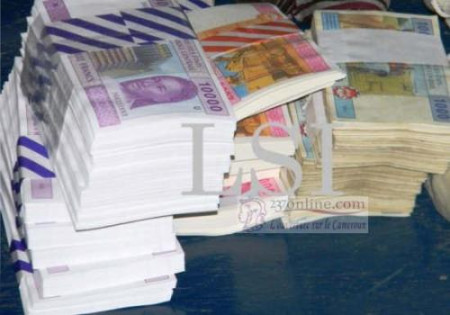
Demand for Bank of Central African States (BEAC) liquidity continued to rise after the central bank eased monetary policy. Once again, commercial banks requested more funds than the central bank made available.
Banks requested CFA535.5 billion during the BEAC’s weekly liquidity injection on July 14, 2026. Despite increasing the amount offered to CFA500 billion, the central bank was unable to meet CFA35.5 billion of demand from banks operating across Cameroon, the Republic of the Congo, Gabon, Equatorial Guinea, Chad, and the Central African Republic.
Demand for BEAC refinancing has now increased in three consecutive auctions. Banks requested CFA400 billion on June 23, CFA444.5 billion on June 30, CFA497 billion on July 7, and CFA535.5 billion on July 14, representing a 33.9% increase in just three weeks.
Over the same period, the BEAC raised the amount available from CFA420 billion to CFA500 billion.
The stronger demand has coincided with the monetary policy easing announced by the BEAC’s Monetary Policy Committee on June 29. However, the timing alone does not establish that lower interest rates are the sole reason banks are seeking more central bank funding.
Demand has exceeded supply since late June
During the June 23 auction, banks received the full CFA400 billion they requested, with the BEAC offering CFA420 billion. A week later, demand reached CFA444.5 billion against an available amount of CFA440 billion, leaving CFA4.5 billion unmet.
The gap widened significantly on July 7, when banks requested CFA497 billion while the central bank offered CFA440 billion, creating excess demand of CFA57 billion. After raising the auction size to CFA500 billion on July 14, the BEAC reduced the shortfall to CFA35.5 billion, although it still could not satisfy all bids. The auction was 107.1% subscribed.
The figures point to growing demand for central bank refinancing, but they do not indicate how banks intend to use the funds. The liquidity could support lending to businesses and households, help manage short-term funding needs, refinance existing positions, or finance purchases of government securities.
Borrowing costs remain above the policy rate
The stronger appetite for liquidity comes after the Monetary Policy Committee lowered the policy auction rate from 4.75% to 4.50%. That rate serves as the minimum bidding rate for the BEAC’s variable-rate liquidity auctions. Banks can bid above it, meaning their actual borrowing costs depend on competition during each auction.
On July 14, the marginal rate reached 4.70%, while the weighted average rate paid on allotted funds stood at 4.79%. That compares with 4.89% on June 23 before the policy easing, 4.76% on June 30, and 4.78% on July 7.
The monetary easing has therefore reduced banks’ average refinancing costs compared with levels seen before the June 29 decision. However, the gradual increase in the weighted average rate from 4.76% to 4.79% between June 30 and July 14 suggests that stronger demand is already limiting part of the transmission of lower policy rates.
The BEAC also reduced its marginal lending facility rate from 6.25% to 5.75%, lowering the cost of overnight borrowing from the central bank.
In addition, it cut reserve requirement ratios from 7% to 6.5% on demand deposits and from 4.5% to 4% on term deposits, freeing up part of the funds banks are required to hold with the central bank.
The impact on lending remains uncertain
According to the BEAC, the policy easing is intended to improve financing conditions across the region. In theory, lower refinancing costs can reduce lending rates, encourage banks to extend more credit, and support investment.
Whether that happens, however, will depend on several factors, including banks’ lending strategies, the quality of loan applications, borrower risk, and the relative attractiveness of government securities issued by CEMAC member states. Upcoming data on commercial lending rates, new loan volumes, and the allocation of credit between the public and private sectors will provide a clearer picture of whether banks’ stronger demand for BEAC funding is translating into increased financing for the real economy.
The policy easing comes as the central bank forecasts regional economic growth of 3.2% in 2026, down from 3.4% in 2025. Annual average inflation is expected to edge up to 2.4% from 2.1% a year earlier.
The increase in banks’ refinancing demand is therefore an early sign that lenders are responding to the BEAC’s easier monetary stance. The next test will be whether the additional liquidity supports sustained credit growth or is used primarily to meet banks’ liquidity needs and investment in government debt.
BRM

