

























The Ministry of Small and Medium-Sized Enterprises, Social Economy and Handicrafts (MINPMEESA) and the World Bank have advanced discussions on the creation of a Credit Guarantee Company and the transformation of the Cameroon Bank of Small and Medium-Sized Enterprises (BC-PME). The reforms are intended to improve access to finance for small and medium-sized enterprises and strengthen their contribution to economic growth.
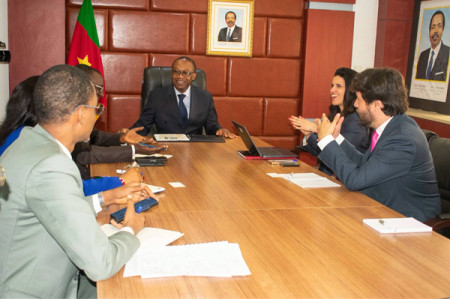
The proposals were reviewed during a working session in Yaounde between Minister Achille Bassilekin III and a World Bank delegation led by Leonardo Iacovone, Practice Manager for Finance, Competitiveness and Investment for Western and Central Africa. The meeting forms part of ongoing cooperation between MINPMEESA and the World Bank to accelerate reforms supporting private-sector development.
Talks focused on a roadmap for establishing the guarantee company and restructuring BC-PME. Both measures are designed to tackle one of the biggest obstacles facing Cameroonian SMEs: limited access to credit. By reducing lending risks for commercial banks and other financial institutions, the guarantee mechanism is expected to unlock financing, particularly for smaller businesses seeking capital to expand and improve productivity.
The delegation also reviewed progress under the World Bank-funded Social Safety Nets Project. More than 1,000 young entrepreneurs have already received support through the program, while 750 businesses have been formalized. Authorities aim to increase the number of beneficiaries to 2,000 before the project ends.
The discussions also covered the implementation of Cameroon’s National Financial Sector Development Strategy and National Development Strategy. Priority areas include raising SME productivity, creating jobs, strengthening priority value chains, expanding financial inclusion, promoting green finance and attracting private investment.
According to Cameroon’s National Institute of Statistics, SMEs account for more than 99% of the country’s businesses and play a central role in employment creation. The African Development Bank has likewise identified limited access to finance as a major obstacle to private-sector growth and competitiveness.
The World Bank has consistently argued that broader financial inclusion and better access to productive financing are essential to accelerating private-sector-led growth. Those priorities align with the government’s broader ambition to mobilize more private capital and position SMEs as a key driver of economic transformation.
The meeting concluded with both sides reaffirming their commitment to advancing the planned reforms and strengthening partnerships aimed at expanding financing opportunities for entrepreneurs while reinforcing Cameroon’s financial ecosystem.
Mercy Fosoh

