























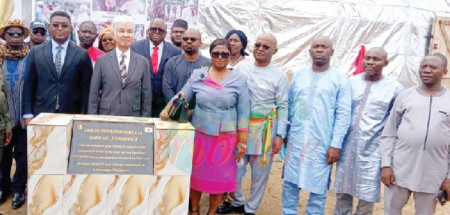
A new cocoa post-harvest treatment plant backed by Japan has opened in Djop, on the southern outskirts of Ebolowa, in a move expected to improve bean quality, support local processing and strengthen Cameroon’s position in higher-value cocoa exports.
The 1,000-square-metre facility, commissioned on May 18 under Japanese cooperation, is designed to improve cocoa fermentation, drying and storage conditions for producers in the South region.
The project comes as Cameroon’s cocoa sector records rising export earnings and increased local processing. According to the National Cocoa and Coffee Board (NCCB), the country produced 309,000 tonnes of cocoa during the 2024/2025 season, including 109,000 tonnes processed locally. Cocoa export revenues exceeded CFA810 billion in 2025, according to external trade data published in early 2026.
The infrastructure was developed under a cooperation agreement between the Ebolowa II Council and the Japanese government.
Speaking at the inauguration, Japanese Ambassador Minami Kentaro said agriculture, fisheries, infrastructure and environmental protection remain priority areas of Japanese support in Cameroon.
Ebolowa II Mayor André Thomas Bengon described the project as the outcome of bilateral cooperation aimed at strengthening local agricultural processing capacity.
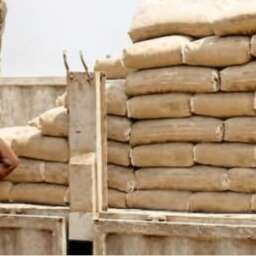
The plant includes four buildings: a fermentation unit, two solar dryers and a storage warehouse. Authorities say the infrastructure will provide producers with improved post-harvest handling and quality control services.
Thomas Abate, coordinator of the treatment unit, said the centre would also help producers meet increasingly specialised market demand.
“Some partners are looking for red cocoa powder produced to specific orders. The treatment centre now provides that product and develops the services needed to respond to those market demands,” he said.
Authorities expect the project to improve value retention locally by reducing poor post-harvest practices that affect cocoa grading and market prices.
Processed cocoa exports generated CFA385.3 billion in 2025, up from CFA317.9 billion in 2024, according to data from the National Institute of Statistics.
Djop village chief Claire Edwige Meyo said the facility would help improve the locality’s reputation and create opportunities for young people.
“These installations will contribute to the development of Djop by creating jobs and giving cocoa producers improved conditions to deliver better quality beans for the market,” she said.
Mercy Fosoh

