

























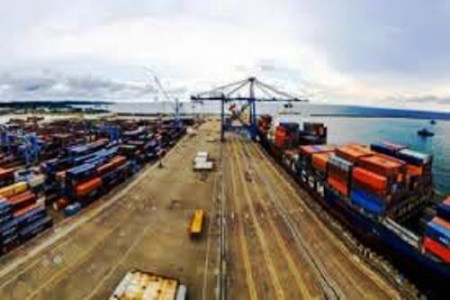
The container terminal at Cameroon’s Port of Kribi is preparing to expand by an additional 8 hectares as operators look to keep pace with fast-rising cargo traffic and strengthen the port’s regional role in Central and West Africa.
David Azra, managing director of Kribi Conteneurs Terminal (KCT), said construction is expected to begin in July 2026 with China Harbour Engineering Company (CHEC), the Chinese firm that built the Kribi deep-water port.
The investment is estimated at between CFA16.3 billion and CFA19.6 billion and will be financed jointly by KCT and the Port Authority of Kribi (PAK).
According to terminal officials, the expansion will raise static storage capacity from 24,000 TEUs to 34,000 TEUs. The project is also expected to increase annual container handling capacity to between 1 million and 1.2 million TEUs by 2028.
KCT also said a feasibility study is underway for the construction of one or two additional berths. Azra said the future infrastructure is intended to prepare for expected growth in regional cargo traffic, as well as future industrial and mining-related shipments.
The announcement comes as traffic at Kribi continues to climb sharply. One year after the second container terminal entered service on May 9, 2025, KCT said it had processed 750,000 TEUs, compared with 412,087 TEUs during the previous period, an increase of 82% year over year.
The company said most of that growth has been driven by regional transshipment activity, which now accounts for around 70% of handled volumes. About 30% of those flows involve cargo moving to or from Douala.
KCT added that containers are redistributed from Kribi to Angola, Nigeria, and other West African ports. Beyond transshipment operations, the terminal now handles nearly 65% of Cameroon’s first-port container arrivals before cargo is shipped inland.
For Azra, Kribi is increasingly positioning itself as an international logistics platform. He said the future Kribi Port Industrial Zone (KPIZ), which covers 4,500 hectares, along with planned mineral and oil terminals, should further strengthen the port’s role in supporting Cameroon’s economy and regional trade.
Frédéric Nonos

